

About one in five online crime cases reported in Thailand in 2026 involved victims aged 18 to 25, according to figures released on October 29 by Thailand's Technology Crime Investigation and Analysis Division. The data challenge the assumption that younger, digitally savvy consumers are less vulnerable to financial scams.
Mr. Rywin Voravongsatit, President of the Credit Card Fraud Prevention Club and Head of Operations Control & Merchant Operations at Krungthai Card Public Company Limited (KTC), said, “Online financial fraud is not solely a matter of technological vulnerabilities. Scammers also exploit human psychology, using fear, trust, and a sense of urgency to pressure victims into acting without verifying the facts. As artificial intelligence (AI) makes it easier to create convincing imitations of people's voices and images, staying safe requires more than checking websites and links. Consumers must also verify identities and the legitimacy of financial requests before taking action.”
Three Online Scam Tactics Consumers Should Watch Out For
1. Age-Targeted Scams Exploiting Fear and Financial Incentives
Scammers adapt their tactics to different age groups. Young people may encounter callers impersonating police officers who falsely claim they are involved in criminal cases, or fraudulent online job offers requiring upfront payments. Working-age adults may be targeted through investment groups promising unusually high returns, only to find themselves unable to withdraw their money after investing more. Older adults may receive calls from individuals posing as government officials or financial institution representatives, instructing them to transfer funds to supposedly secure accounts or install applications that give scammers unauthorized access to their phones.
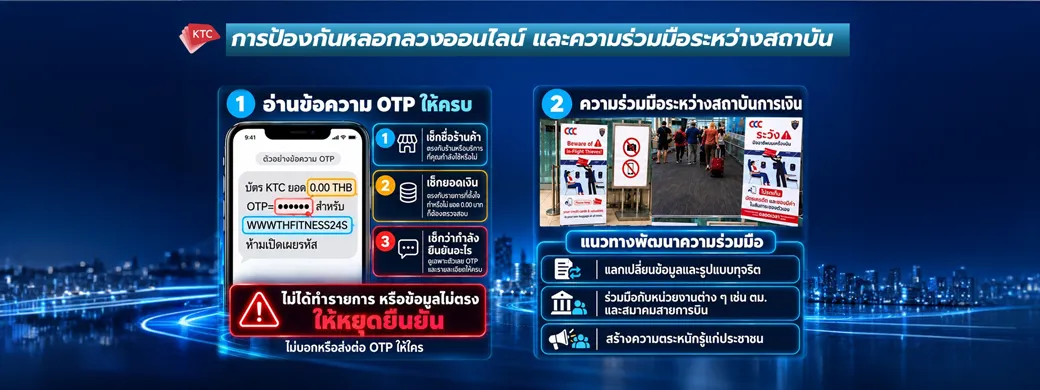
2. Credit Card Data Theft Through Fake Websites and OTP Scams
Fraudulent shopping websites may use unusually low prices or attractive promotions to persuade consumers to enter their credit card details, which can then be used for unauthorized transactions. Scammers may also trick cardholders into disclosing one-time passwords (OTPs) by claiming the codes are needed to confirm purchases or redeem special offers. Cardholders should verify websites before making payments and carefully check transaction notifications. If the merchant or transaction amount does not match the intended purchase, they should stop the transaction immediately.
3. AI-Generated Voice and Image Impersonation
Scammers can misuse AI to imitate the voices or create realistic images of people known to their victims, including family members, friends, and trusted individuals. They often fabricate emergencies to pressure victims into transferring money or disclosing sensitive information. Even a familiar voice or recognizable face during a video call should not be treated as sufficient proof of identity.
KTC Recommends Five Ways to Reduce Financial Fraud Risks
1. Stop and Verify Before Transferring Money
If someone claiming to represent a government agency or financial institution demands a transfer to verify an account or prove innocence, end the call and contact the organization independently using its official contact details.
2. Never Share OTPs or Sensitive Information
Always check the merchant name, transaction amount, and purpose before authorizing a payment. If the details are incorrect or the transaction was not initiated by you, do not proceed or disclose the OTP to anyone.
3. Be Wary of Suspicious Websites and Offers That Seem Too Good to Be True
Verify online merchants and investment opportunities, particularly those promising guaranteed high returns or demanding additional payments to release profits. Avoid downloading applications from suspicious links.
4. Confirm Identities Through a Separate, Trusted Channel
When receiving an urgent request for money, even from someone who appears to be a friend or family member, contact that person directly using a previously established telephone number or another trusted channel before making a transfer.
5. Monitor Transactions and Act Quickly on Suspicious Activity
Enable transaction alerts and regularly review credit card activity. KTC credit cardmembers can temporarily block their cards through the KTC Mobile app or contact KTC PHONE at 02 123 5000 immediately if they detect suspicious transactions.
Mr. Rywin said preventing financial fraud requires both effective security measures and consumers who know how to recognize suspicious requests. KTC is strengthening identity checks, cardholder data protection and suspicious transaction monitoring. It also works with partner organizations to respond to evolving fraud tactics.
“Technology can strengthen transaction security, but it cannot replace sound judgment. Scammers do not always need to breach a system if they can persuade consumers to disclose sensitive information or authorize transactions themselves. The key is not simply knowing how to use technology, but knowing when to stop, think, and verify before making a decision,” Mr. Rywin concluded.