The Company recognizes that climate change is a risk affecting the economy, society, and the financial services sector, encompassing both physical risks and transition risks, alongside emerging opportunities arising from the growth of a low-carbon economy. Accordingly, the Company integrates climate-related considerations into its corporate strategy, governance structure, and risk management processes in a systematic manner. This approach is guided by materiality assessment and transparent disclosure in alignment with relevant international standards.
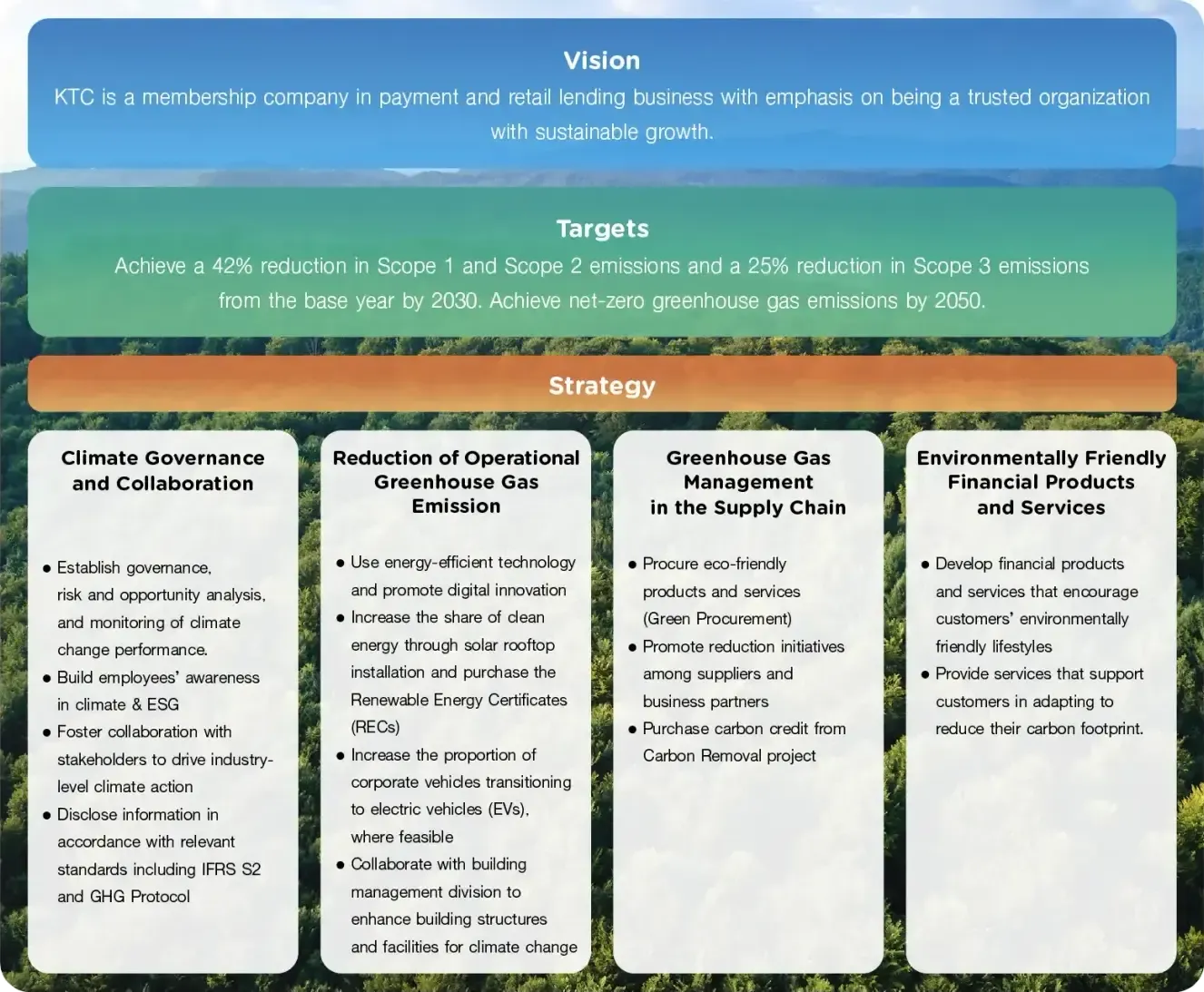
The Company is committed to reducing greenhouse gas (GHG) emissions across its entire value chain, covering both internal operations and financial services. It has set a target to achieve Net Zero GHG emissions by 2050, supported by interim targets, key performance indicators (KPIs), and continuous monitoring mechanisms. Key approaches include improving energy and resource efficiency, increasing the share of renewable energy, developing and expanding products and services that support the transition to a low-carbon economy, and fostering a strong sustainability culture through the engagement of employees, customers, and business partners. These efforts not only contribute to national GHG reduction goals but also enhance the Company’s long-term competitiveness and sustainability.
Remark: The Company revised its base year from 2022 to 2025.
Positive impacts: Enhancing opportunities for the Company to develop financial products and services that support the transition to a low-carbon economy. The integration of climate-related considerations into corporate strategy and risk management strengthens competitiveness, reduces financial uncertainty, and enhances the stability of long-term business performance.
Negative impacts: Climate-related extreme events and economic volatility may adversely affect customers’ debt repayment capacity and the Company’s asset quality. In addition, changes in climate-related regulations may increase operational and investment costs during the transition period.
Positive impacts: The Company mitigates environmental impacts from its operations through improved energy efficiency, the adoption of digital systems, and reduced resource consumption. These efforts contribute to long-term cost savings and support business continuity.
Negative impacts: Indirect GHG emissions within the value chain (Scope 3) and energy consumption from information technology systems, may result in environmental impacts, as well as reputational risks and misalignment with sustainable development directions.
Positive impacts: Responsible actions on climate change help raise awareness and encourage engagement among employees, communities, and society in environmental stewardship. They promote sustainable lifestyles and working practices, while also reducing health and safety risks that may arise from extreme weather conditions.
Negative impacts: Impacts from climate change, such as heatwaves, floods, and natural disasters, may affect the quality of life, health, and well-being of employees and surrounding communities. These impacts may also increase inequality in access to resources and opportunities for adaptation.
Positive impacts: The Company can strengthen respect for human rights through policies and governance that consider the impacts of climate change on employees, customers, and stakeholders, thereby reducing long-term reputational risks.
Negative impacts: Climate change may indirectly affect the right to livelihoods and the economic security of customers and communities, as well as increase human rights risks across the value chain if business partners are unable to comply with established standards.
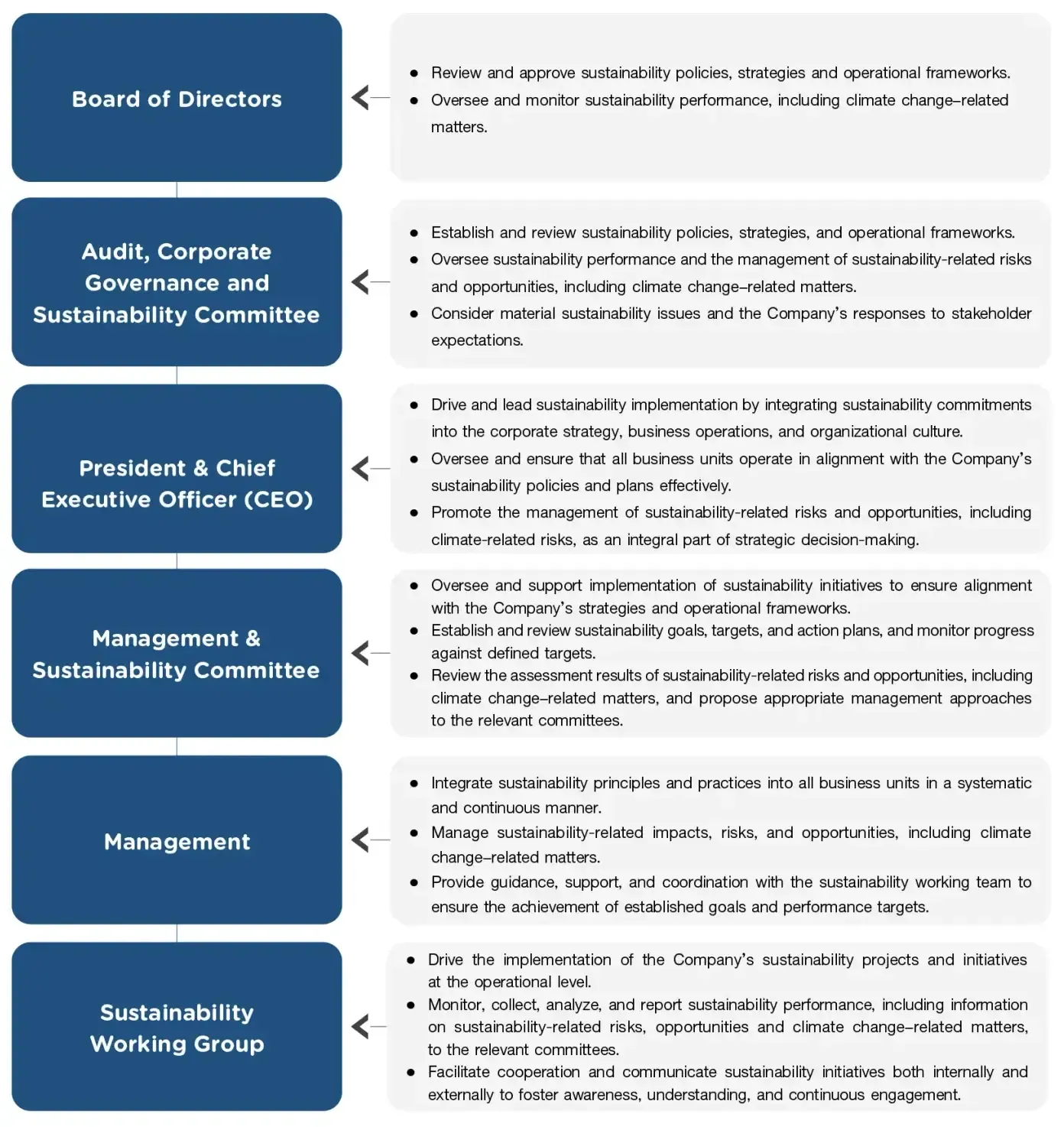
The Company has established roles and responsibilities for overseeing and managing climate change issues. The Board of Directors has assigned the Audit, Corporate Governance and Sustainability Committee, together with the Management & Sustainability Committee, to oversee, monitor, analyze, and assess sustainability risks, including climate change risks. This is to ensure that appropriate mitigation and adaptation measures can be implemented. The performance results are reported to the Board of Directors at least once a year.
At the management level, the Chief Executive Officer oversees the implementation of the Company’s climate change strategy, supported by the Sustainability working group, which serves as the key mechanism for driving initiatives, monitoring performance, and reporting progress against the Company’s sustainability objectives. In this regard, the Company has integrated climate-related risk management as one of business risks, enabling effective management of climate change impacts across strategic planning, operations, and long-term value chain management.
The Company has established a comprehensive risk management policy that encompasses sustainability-related risks, including Environmental, Social, and Governance (ESG) risks. Climate-related risk management is integrated into the Company’s enterprise risk management framework, under which risk owners and relevant functions are responsible for identifying, assessing, and monitoring climate-related risks, covering both transition risks and physical risks, through a sustainability risk assessment conducted on an annual basis. Where climate-related risks are assessed at a Rather High level or above, the responsible functions are required to develop mitigation and response plans and report the results to the management and the Risk Management Committee.
To mitigate the impacts of transition risks, the Company continuously monitors changes in laws, regulations, and relevant trends at both domestic and international levels to identify emerging climate-related risks and adjust its strategies accordingly. In addition, the Company has established a Business Continuity Plan (BCP) and arranged alternate sites with readiness to support Critical Business Functions (CBFs), thereby minimizing potential impacts arising from physical climate-related risks.
The Company recognizes the risks and opportunities arising from climate change, which may affect its business operation, financial resilience, and stakeholders across the value chain. Accordingly, the Company has integrated its climate change strategy as a core component of the corporate sustainability strategy to support long-term resilient growth and transition toward a low-carbon economy.
The Company comprehensively assesses climate-related risks and opportunities to identify and analyze potential impacts across value chain stages on its own operations, upstream activities and downstream activities, in both the short and long term. The assessment considers physical risks, such as extreme weather events and natural disasters that may affect infrastructure or operations, as well as transition risks, including changes in regulations, climate-related disclosure standards, and stakeholder expectations. In addition, the Company analyzes business opportunities arising from climate change, such as the adoption of energy-efficient technologies and the development of financial products and services that respond to the transition toward a low-carbon economy.
Based on the assessment results, the Company has established concrete mitigation and adaptation measures to address climate change, focusing on reducing operational GHG emissions, increasing the share of clean energy, managing resources efficiently, promoting environmentally responsible behaviors within the organization, and fostering collaboration with business partners across the value chain. The Company has integrated climate risk assessment outcomes into its enterprise risk management processes to continuously monitor the situation, evaluate performance, and adjust measures in line with evolving circumstances, thereby supporting sustainable business objectives and the goal of achieving net-zero GHG emissions by 2050.
Remark:
(1) Time frame consisting of short-term: present - 2030, medium term: year 2031 - 2040 and long-term: year 2041 - 2050
(2) Policy and regulation consisting of current regulation, emerging regulation, and legal risk.
Remark:
(1) Time frame consisting of short-term: present - 2030, medium term: year 2031 - 2040 and long-term: year 2041 - 2050
Remark:
(1) Time frame consisting of short-term: present - 2030, medium term: year 2031 - 2040 and long-term: year 2041 - 2050
The Company recognizes the importance of managing GHG emissions to support sustainable business operations and mitigate the impacts of climate change. Accordingly, the Company has conducted a comprehensive assessment and prepared a GHG inventory covering Scope 1, Scope 2, and Scope 3 emissions in accordance with the Greenhouse Gas Protocol. This enables the Company to identify significant emission sources and establish appropriate management approaches.
The Company’s primary sources of Scope 1 emissions include fuel consumption from company vehicles, refrigerant leakage, and methane emissions from septic tanks. Scope 2 emissions arise from electricity consumption. Scope 3 emissions consist of other significant indirect emissions across the value chain, including purchased goods and services, fuel- and energy-related activities, waste generated from operations, business travel, and employee commuting. Downstream transportation and distribution, Use of sold products, and Investments. The GHG emissions assessment serves as a critical baseline for setting emission reduction targets and developing the Company’s long-term environmental management strategies.
Remark
Furthermore, environmental performance has been independently verified and assured by LRQA (Thailand) Limited to ensure that the disclosures are accurate and prepared in accordance with the applicable reporting standards and assurance criteria.
Environment and Climate change linked incentives
The Company has integrated environmental and climate change issues into performance indicators and linked them to executive and employee incentive programs to support progress toward the organization's sustainability goals.
In 2025, the Company implemented GHG reduction measures at its office premises located in UBC II Building and Thai Summit Tower through continuous energy efficiency and resource management initiatives. These included replacing conventional lighting with LED systems, optimizing air-conditioning operating hours, and installing rooftop solar panels. As a result of these initiatives, the Company reduced GHG emissions from electricity consumption
by a total of 116 tCO2e compared to the previous year.
In addition, the Company installed electric vehicle charging stations (EV Stations) to promote environmentally friendly transportation. This initiative contributed to an additional reduction of 0.95 tCO2e compared to the use of fossil fuel-powered vehicles.
The Company enhanced operational efficiency and reduced paper consumption through digitalization initiatives. Key initiatives include consolidating multiple documents into a single envelope through template improvements, delivering documents to customers via email, providing electronic statements (e-Statements), and implementing e-Coupons. These measures reduced paper usage by more than 10,343 reams, equivalent to a reduction of 52.2 tCO2e in GHG emissions.
In addition, the Company has implemented waste management practices starting at the source by promoting proper waste segregation and ensuring appropriate disposal or reuse. Initiatives include donating usable electronic equipment, recycling substandard plastic cards, separating various types of paper and plastic for proper recycling. A total of 95.3 tons of waste were directed to recycling processes, resulting in the avoidance of landfill disposal and a reduction of 75.6 tCO2e in GHG emissions.
The Company places strong emphasis on enhancing sustainability knowledge, understanding, and awareness among employees at all levels to support responsible business practices aligned with sustainable development principles. In 2025, the Company conducted an online training program “Corporate Governance and Sustainable Development”, aimed at strengthening employees’ understanding of sustainability concepts, the potential impacts of business operations on stakeholders, and the roles and responsibilities of employees in driving the Company toward long-term sustainability. The training covered key topics, including corporate sustainability trends, good corporate governance practices, environmental and social impact management, operational policies and measures adopted by the Company, GHG management, and GHG emissions reduction initiatives to support environmental goals and the transition toward a low carbon economy. A total of 1,821 employees representing 100% of the Company’s total employees completed the training and passed the required assessments. This reflects the Company’s strong commitment to capacity building and the cultivation of a sustainability-oriented corporate culture in a concrete and continuous manner.
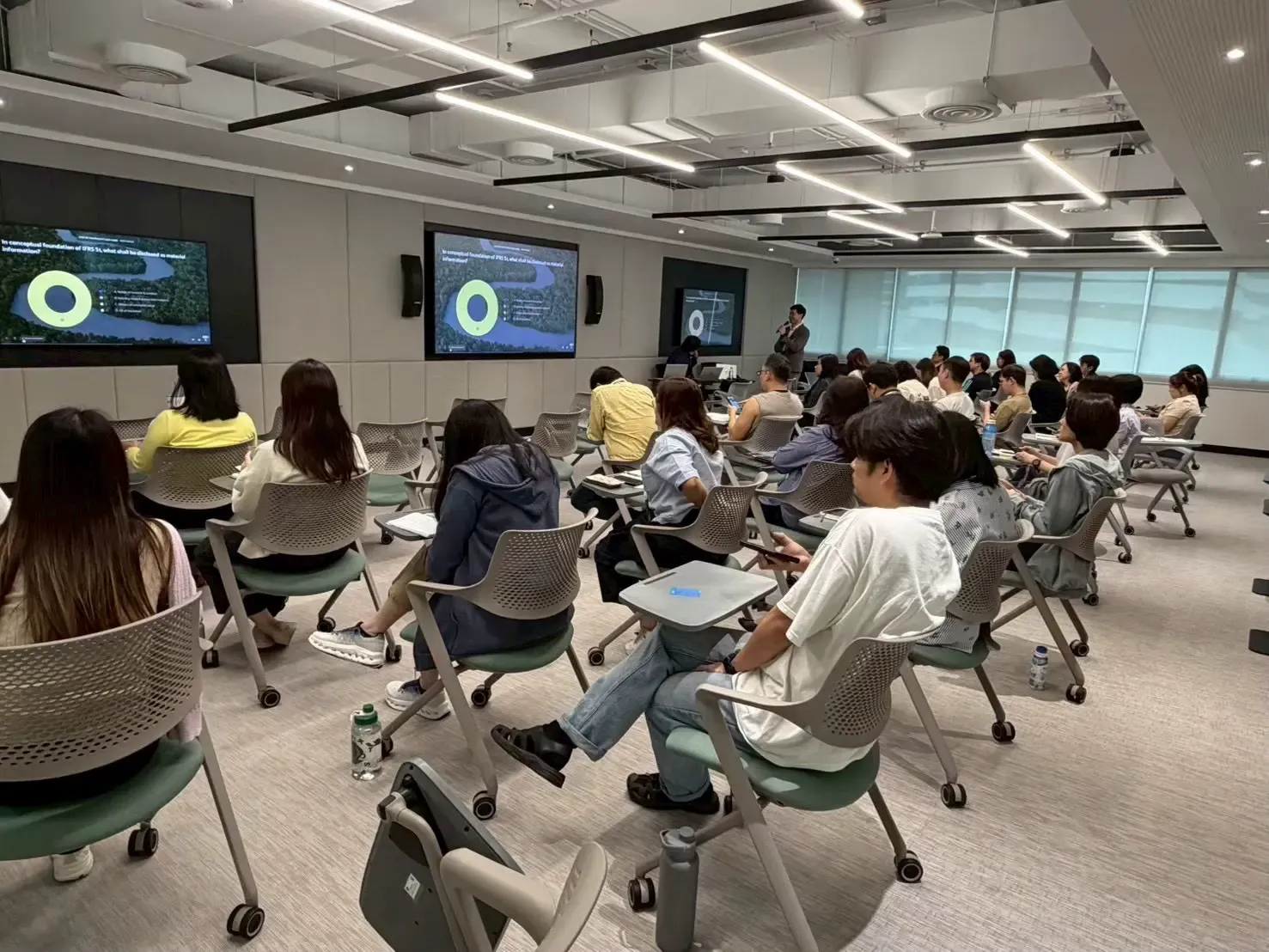
The Company provided training on the greenhouse gas emissions reduction (Decarbonization Roadmap) and Climate-related Disclosures (IFRS S2) to employees in order to enhance their knowledge, understanding, and awareness of climate change-related risks and opportunities relevant to the business. The training also emphasized the role of each business unit in supporting the Company's greenhouse gas emissions reduction initiatives and prepared employees to integrate climate-related considerations into the Company's operations and management processes.
These initiatives have strengthened employees' capabilities to adapt to the climate transition, mitigate adverse impacts arising from industry and climate transition changes, support the implementation of the Company’s greenhouse gas emissions reduction strategy, and enhance preparedness for compliance with evolving sustainability requirements and standards. Collectively, these efforts contribute to strengthening the Company's long-term competitiveness and fostering sustainable business growth.