Total water consumption was 3,837 cubic meters
The Company is committed to effective resource, energy, and waste management throughout its operations to enhance resource efficiency, reduce costs, and minimize environmental impacts. Energy conservation measures, the adoption of renewable energy, and improvements in equipment and building efficiency are integrated into the Company’s corporate strategy and climate risk management processes. The Company establishes targets and key performance indicators (KPIs) covering resource consumption, energy use, waste management, and greenhouse gas (GHG) emissions, and continuously monitors and evaluates performance. These efforts support the mitigation of risks associated with energy costs, regulatory requirements, and the transition to a low-carbon economy.
In addition, the Company prioritizes waste reduction at source, as well as the reuse and recycling of materials, alongside appropriate waste segregation practices. Digital technologies and innovative solutions are leveraged to improve resource efficiency and sustainably reduce GHG emissions. The Company also promotes employee participation through awareness campaigns and engagement initiatives aimed at fostering a culture of responsible resource consumption across the organization.
Positive impacts: Effective resource management enhances the Company’s operational efficiency while contributing to long-term cost reductions in energy consumption, material use, and operational processes. The adoption of digital technologies and the continuous improvement of internal processes support business agility, strengthen financial resilience, and reinforce the Company’s long-term sustainable performance.
Negative impacts: Ineffective resource management may lead to increased operational costs and could adversely affect the Company’s performance in the absence of effective planning and cost-efficiency assessments.
Positive impacts: Efficient resource management helps reduce energy consumption, water use, and the consumption of materials in organizational operations. This leads to lower GHG emissions and reduced waste generation. In addition, establishing environmental guidelines for suppliers and implementing sustainable procurement practices contribute to minimizing environmental impacts across the value chain.
Negative impacts: Reliance on resource-intensive and energy-consuming technologies may increase environmental risks and long-term costs if efficiency improvements or transitions to lower-impact resources cannot be implemented in a timely and effective manner.
Positive impacts: Effective resource management reflects the Company’s commitment to social responsibility and helps strengthen trust among customers, employees, and other stakeholders. It also fosters an organizational culture that emphasizes the responsible and mindful use of resources.
Negative impacts: Changes in operational processes or the adoption of new technologies to enhance resource efficiency may affect employees’ ability to adapt and alter existing work practices if effective communication and appropriate skills development are not adequately implemented.
Positive impacts: The Company can strengthen respect for human rights through transparent and responsible business practices. Effective resource management helps mitigate indirect impacts on communities and the environment, while supporting fair and responsible practices across the value chain.
Negative impacts: If resource management and procurement practices do not adequately consider human rights standards, there may be risks associated with the inappropriate use of labor or resources within the supply chain, which could adversely affect the Company’s reputation and stakeholder confidence.
The Company has established action plans and implemented energy management measures in a systematic manner, including upgrading electrical systems and office equipment to enhance energy efficiency, transitioning to LED lighting, enhancing the efficiency of air-conditioning systems and building energy management, as well as installing solar systems to increase the use of renewable energy. The Company regularly monitors and evaluates performance to continuously improve and further develop energy reduction initiatives. In addition, the Company encourages the participation of employees at all levels by fostering a culture of efficient energy use and encouraging the adoption of digital technologies and automation systems that help minimize energy consumption.

The Company has developed the “Green Canteen” at the UBC II Building, 15th Floor, as an employee recreational green area while promoting energy efficiency and environmental responsibility. The project incorporates the installation of a solar rooftop system to generate clean energy, along with improvements to facilities to enhance efficiency, including energy-saving lighting, ventilation fans, wooden furniture, and an integrated waste management system consisting of food waste digester and waste segregation bins.
The project was initiated in September 2025 and generated a total of 2 megawatts-hours of electricity from clean energy sources, contributing to a reduction of 0.95 tCO2e GHG emissions. In addition, the project helps reduce food waste sent to landfills and promotes environmental awareness among employees. This project supports the Company’s Green Office practices and enhances employee welfare by providing an environmentally friendly and sustainable recreational space.
The Company has installed electric vehicle (EV) charging stations equipped with both AC (Slow Charge) and DC (Fast Charge) chargers to serve the Company’s fleet vehicles. The stations commenced operation in 2025 to support the Company’s clean energy policy and align with its Net Zero Emissions commitment. The EV charging infrastructure is integrated with the Energy Management System (EMS) to enhance energy efficiency, optimize electricity consumption, reduce operating costs, and manage power usage during peak load periods.
This project contributes to a reduction in fossil fuel consumption of 472 liters and a decrease in GHG emissions of approximately 0.95 tCO2e. In addition, the project supports the development of EV-enabling infrastructure, strengthens the EV ecosystem, and reinforces the Company’s sustainable and environmentally responsible corporate image.
Energy Management performance
Remark
The Company recognizes the increasing risks of water stress, particularly in urban areas where water demand continues to rise due to economic growth and population expansion. Although the Company’s operations are office-based and do not involve significant water consumption compared to industrial manufacturing activities, it remains committed to responsible water use. These efforts aim to minimize impacts on local water resources and mitigate potential future risks associated with water scarcity.
The Company has established measures to control water consumption and continuously monitor performance, with a focus on reducing water consumption and improving water-use efficiency. Water-saving devices have been installed across the office. In addition, the Company has enhanced plumbing systems to prevent leakages and ensure proper maintenance of related equipment. The Company also collaborates with the building management division to monitor water quality in compliance with applicable standards and legal requirements. Furthermore, internal campaigns promoting sustainable water use are implemented to raise awareness and foster a culture of responsible water consumption among employees across the Company.
Water Management performance
Remark
The Company’s waste management approach focuses on applying the 3Rs principle (reduce, reuse, recycle) across all operational processes, including reducing the use of single-use plastics, optimizing paper consumption through increased adoption of electronic documentation, waste segregation, and materials recycling, and ensuring the proper disposal of electronic waste to mitigate environmental and health risks. In addition, the Company collaborates with suppliers and stakeholders to develop environmental initiatives that support the circular economy and enhance waste management standards throughout the supply chain. The Company also encourages employee participation at all levels through awareness campaigns, internal communications, and the cultivation of an organizational culture that emphasizes responsible waste management.
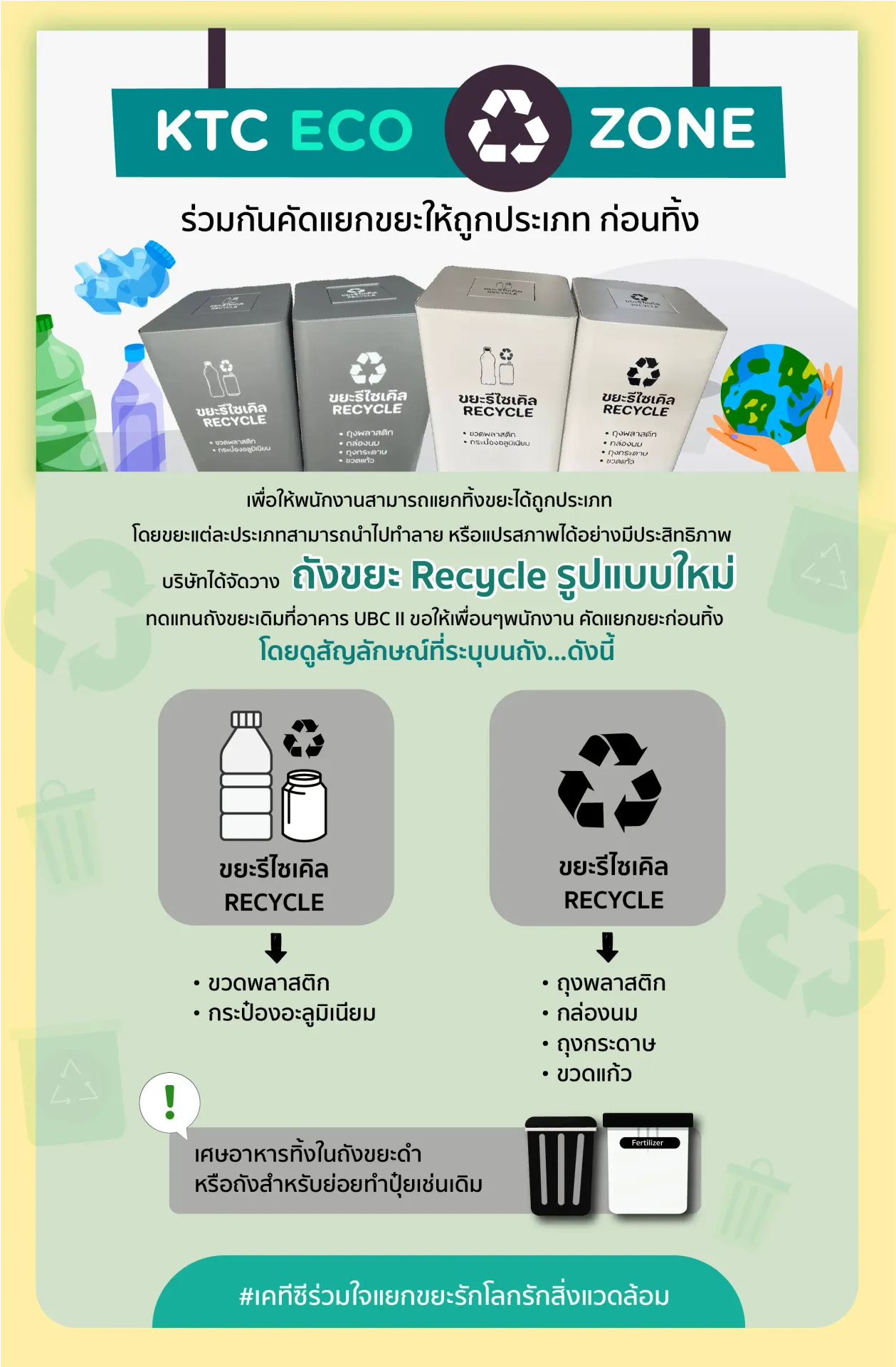
The Company has proactively implemented a comprehensive waste segregation system at the source by promoting employee participation through internal communication and concise awareness materials on proper waste separation. Segregated waste collection points are installed throughout office areas, covering general waste and recyclable materials such as glass, plastic, and paper, to encourage correct disposal behavior and reduce contamination of recyclable waste. In addition, the Company has installed food waste digesters to process organic waste into organic fertilizer, thereby reducing the amount of waste sent for disposal and enhancing resource recovery.
In 2025, the Company directed a total of 95.3 tons of waste to recycling processes through certified waste management providers. This initiative helped reduce environmental impacts associated with landfill disposal and increased the volume of materials returned to production or reuse cycles. The effort aligns with the principles of the circular economy and contributed to the reduction of 75.6 tCO2e GHG emissions.
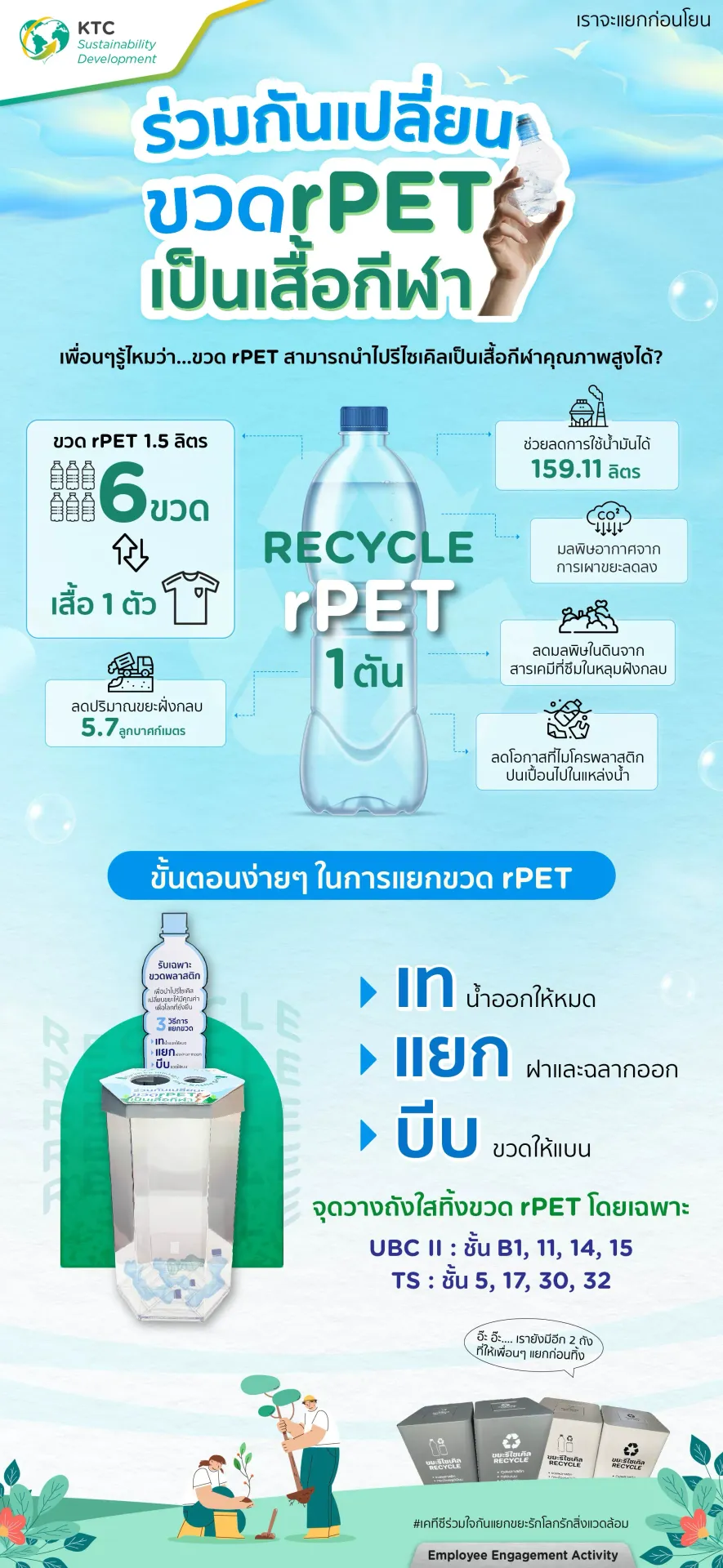
The Company launched the “rPET Bottle to Sportswear” project to raise awareness and foster waste upcycling and climate change mitigation among employees. The project encourages employee participation in segregating rPET bottles at designated collection points provided by the Company to ensure proper disposal. The collected rPET bottles were consolidated and upcycled into sportswear used for internal corporate activities, such as Virtual Run, Badminton, and Soccer Cup events.
A total of 13,780 bottles were collected and converted into sportswear
The Company promotes efficient resource and materials management through the adoption of digital innovation to reduce paper consumption and minimize environmental impacts. This includes the implementation of paperless workflows and the use of recycled paper, reflecting the Company’s commitment to enhancing operational efficiency while fostering environmental stewardship.
The Company enhanced its customer document delivery process by consolidating multiple documents into a single envelope through improved templates and delivery systems for the NCB Year-End Letter. In addition, the Company expanded digital delivery channels by sending Reject NCB Letters via email. These measures significantly reduced paper consumption, envelope usage, and postal deliveries, while also minimizing delivery delays. As a result, paper consumption was reduced by 328 reams, leading to a reduction of approximately 1.7 tCO2e and cost savings of 1.6 Million Baht in document production and delivery. Beyond cost efficiency, these initiatives also contributed to waste reduction and supported the Company’s transition toward more sustainable digital operations.
328 reams of paper saved, reducing 1.7 tco2e emissions
The Company encouraged customers to reduce paper consumption by adopting electronic statements (e-Statements) in place of printed statements, as well as utilizing e-Coupons to receive benefits and discounts from partner merchants. These projects reduced paper usage by a total of 10,015 reams and contributed to an estimated reduction of 50.5 tCO2e. These efforts reflect the Company’s commitment to conducting business in an environmentally responsible manner while supporting the transition toward a sustainable digital society.
10,015 reams of paper saved, reducing 50.5 tco2e emissions
Waste Management performance
Remark