Zero cases of human rights violations
Zero cases of human rights violations
In 2025, there were no complaints or whistleblowing reports regarding human rights violations.
The Company recognizes the importance of respecting and promoting human rights across all business operations, in alignment with internationally recognized standards. This commitment ensures that the Company’s activities do not result in adverse human rights impacts on employees, stakeholders, or relevant communities. Human rights considerations extend beyond labor issues or social fairness to include the implications of rapidly evolving technological developments. While technology enhances operational efficiency and business capabilities, it may also give rise to human rights risks, such as violations of privacy resulting from the collection, use, or disclosure of data without consent, particularly in the absence of robust governance processes. Accordingly, the Company has established clear human rights policies and guidelines, which are regularly reviewed and updated to ensure alignment with evolving social, technological, and legal contexts.
Positive impacts: Respect and protection of human rights enhance the confidence of customers, investors, suppliers, and business partners, which is fundamental to financial stability and the long-term sustainability of the organization. Integrating human rights considerations into governance and risk management processes helps mitigate legal risks, disputes, and reputational damage, thereby contributing positively to long-term enterprise value.
Negative impacts: Direct or indirect human rights violations may lead to litigation, legal penalties, and a loss of confidence from investors and capital markets, potentially affecting the company’s financial performance and competitive advantage.
Positive impacts: Conducting business with human rights awareness ensures the company recognizes environmental impacts that may affect the quality of life and well-being of communities. This fosters responsible business decision-making and reduces indirect environmental impacts across the value chain.
Negative impacts: Projects inconsistent with human rights principles may trigger environmental issues that degrade community well-being. For instance, improper disposal of documents or expired credit cards could increase plastic waste or hazardous waste, resulting in broader environmental consequences.
Positive impacts: Respecting human rights promotes fairness, equality, and non-discrimination for customers, employees, and all stakeholder groups. This builds trust, reduces social conflict, and supports the long-term sustainability of the organization.
Negative impacts: The absence of effective mechanisms to prevent, monitor, and remediate human rights violations may lead to complaints, conflicts, and public dissatisfaction, which could adversely affect the Company’s reputation, stakeholder confidence, and relationships with stakeholders.
Positive impacts: Operating in accordance with international human rights standards, such as the UN Guiding Principles on Business and Human Rights (UNGPs), provides a robust framework for the Company to prevent, monitor, and remediate human rights violations across internal operations and the entire value chain.
Negative impacts: Inadequate or inconsistent Human Rights Due Diligence (HRDD) may result in the Company’s unintentional involvement in human rights violations. This poses significant risks to credibility, legal standing, and long-term business resilience.
The Company has established a human rights governance structure under the Board of Directors oversight. The responsibility for governing, monitoring, and assessing human rights risks is delegated to the Audit, Corporate Governance and Sustainability Committee, the Management & Sustainability Committee, and the Risk Management Committee, along with the Compliance business unit and relevant Risk Owners. This structure ensures that operations align with international human rights principles, mitigate risks to stakeholders, and reinforce confidence in the organization’s social responsibility.
The Company is committed to conducting business ethically and respecting human rights by establishing a Human Rights Policy as an integral part of the Code of Conduct. This policy encompasses the prevention of human rights violations, such as child labor, forced labor, human trafficking, freedom of association, the right to collective bargaining, equitable compensation, harassment, and all forms of discrimination. It also covers personal data protection and OHS in the workplace, which is available in both Thai and English. The Company has adopted the United Nations Guiding Principles on Business and Human Rights (UNGPs), adhering to the Protect, Respect, and Remedy framework. Furthermore, the Company communicates human rights policy and its expectations to stakeholders cover employees, suppliers and business partners through providing the regular training for employees and has established a Supplier Code of Conduct to ensure that suppliers and business partners acknowledge and comply with human rights principles throughout their operations.
The Company prioritizes equal treatment of all employees, free from discrimination or exclusion, while respecting all forms of diversity, including education, nationality, race, skin color, religion, sex or gender identity, and physical disability. This commitment spans across recruitment, selection, compensation, benefits, and career promotion. Furthermore, the Company provides comprehensive benefits that extend to LGBTQIAN+ employees and their non-registered partners, such as domestic partner benefits, health insurance, and financial assistance for significant occasions. The Company fosters a culture that respects diverse opinions, provides self-development opportunities for all, and establishes inclusive communication channels.
The Company has implemented measures to prevent and protect employees at all levels from various forms of bullying and harassment, including sexual harassment, non-sexual harassment, discrimination, and sexual misconduct between employees, regardless of their position or rank. Such actions are considered severe disciplinary offenses. Any violation of human rights regulations and policies will result in penalties based on the severity of the offense, such as verbal warnings, written warnings, suspension without pay, termination with severance, or termination without severance.
In addition, the Company has established an HR Clinic as a dedicated channel to receive feedback, provide consultation, and enhance employee welfare in alignment with evolving labor laws. The Company is also committed to treating all employees equally and without discrimination.
The Company adheres to the Market Conduct framework and Responsible Lending principles, covering all stages of the customer journey from pre-sales and sales to after-sales service, as well as aiding debtors facing repayment difficulties. This ensures that customers receive complete and accurate information regarding financial products and services, with offerings and services provided fairly and without discrimination. The Company actively listens to and resolves service-related issues, while establishing appropriate remediation guidelines. Furthermore, the Company is committed to developing products and services that promote clear disclosure of terms, conditions, and necessary warnings to encourage financial discipline and support customers in managing debt effectively for their own benefit. This approach builds confidence, safety, and convenience, ensuring equal access to services for all customers. Additionally, the Company provides ongoing communication and education regarding product usage and potential risks associated with financial products and services.
The Company conducts supplier selection with transparency and responsibility, in accordance with the Outsourcing Policy and Procurement Regulation. Suppliers are required to perform self-assessments, with random audits conducted to ensure compliance with the Supplier Code of Conduct, which encompasses human rights, environment, occupational health and safety. The Company considers and respects the human rights of its suppliers, upholds fair contractual practices, and supports supplier capability development through training and knowledge sharing initiatives to promote responsible and sustainable business practices.
The Company conducts human rights due diligence to assess risks and impacts associated with its own operations and across all stages of the value chain. For new business relations consideration, the Company conducts human rights risks assessments that include cybersecurity and data leakage risks, recognizing their potential impacts on stakeholders. The assessment results are incorporated into the Company's decision-making process for selecting and managing business relationships, with the aim of mitigating risks related to violations of privacy rights and the protection of personal data. This begins with developing human rights guidelines to establish a unified standard throughout the organization. Risks are identified and assessed in accordance with the Human Rights Due Diligence (HRDD) framework and conduct a systematic periodic review of the risk mapping of potential issues on an annual basis, considering key criteria such as severity and likelihood for rights holders. These right holders include own employees and third-party employees, customers, suppliers, sales agents, local communities, and vulnerable groups such as women, children, indigenous peoples, migrant workers, and persons with disabilities.
This process enables the Company to implement appropriate prevention, remediation, and mitigation measures, as well as to prevent future recurrences of violations. The Company continuously monitors performance, provides appropriate remediation for those affected, and communicates human rights information to employees and stakeholders through various channels. These efforts foster understanding and cooperation in respecting human rights sustainably, ensuring that business operations remain aligned with international human rights standards.
Human Rights Due Diligence Process
The Company conducts a human rights impact assessment every two years, integrating this process into its core business operations. The assessment covers the entire value chain and includes relevant stakeholders such as employees, customers, and suppliers.
In 2024 - 2025, the human rights issues assessed are as follows:
The Company’s role as a financial service provider involves risks related to information security and the privacy of customer data or personal data subjects. Data breaches resulting from cyberattacks, inadequate technological safeguards, or insufficiently robust operational processes, as well as the misuse of customers, suppliers, or employee’s data for commercial purposes, may result in violations of human rights.
Customers, employees, suppliers, women, and LGBTQIAN+ individuals.
The Company complies with ISO/IEC 27001:2022 for Information Security Management Systems (ISMS), ISO/IEC 27701:2019 for Privacy Information Management Systems (PIMS), and PCI DSS standards. Operational manuals and various tools are in place to protect customer data, such as the Information Security Policy and Personal Data Protection Policy, which are integrated into the Company’s enterprise-wide risk management framework. The Company has also established channels for reporting personal data breach incidents. Furthermore, an Information Security Committee has been appointed to oversee and manage information security, cybersecurity, and personal data protection matters.
For additional information, please refer to the Cybersecurity and Data Privacy Protection topic.
Providing incomplete or inaccurate information regarding products or services such as interest rates or fees, including cross-selling additional products or services without customer consent, may cause damage by encouraging excessive debt or using data for purposes other than the original application.
Customers, including those inquiring about products, prospects, or recipients of product information, as well as women, children, and LGBTQIAN+ individuals.
The Company prioritizes the complete and accurate disclosure of product information and ensures remediation for grievances arising from sales practices. This is overseen by the Market Conduct Committee, with performance reports submitted to the Audit, Corporate Governance and Sustainability Committee, and the Board of Directors, respectively. Furthermore, the Company focuses on outsource sales agents, from the selection process to mandatory training before being authorized as sales representatives. Regular training programs are provided to employees and outsource sales agents to ensure accurate and complete information disclosure across all sales channels. Additionally, the Company regularly conducts random service reviews and inspects various advertising materials.
For additional information, please refer to the Brand and Customer Trust topic.
Remark: *71% of total suppliers have signed an acknowledgment of the Supplier Code of Conduct and Confidentiality Agreement, which covers guidelines related to respecting human rights.
The Company provides a secure, confidential, and accessible Whistleblowing Channel for both internal and external stakeholders to report cases of human rights violations, discrimination, harassment, or inappropriate behavior. The Company strictly safeguards the information of whistleblowers and does not disclose the identity of the reporting individual. The Company has defined procedures for investigation, enforcement of disciplinary measures, including warnings, work suspensions, termination of employment, or legal action, as applicable. The Company also implements measures to prevent recurrence, including impact mitigation and appropriate remediation. Incidents are reported to management or the Board of Directors in accordance with the Code of Conduct and relevant human resources regulations to ensure that all cases are handled equally and fairly. In addition, the Company remains committed to continuously communicating and raising awareness of human rights issues among employees and stakeholders to foster a culture of respect for human rights and prevent violations at all levels of the organization.
The Company is committed to conducting human rights risk assessments within appropriate timeframes, alongside establishing measures for prevention and impact mitigation, while ensuring continuous monitoring and performance reporting. In the event of human rights violations, the Company will implement appropriate corrective actions and remediation based on the principles of fairness. Furthermore, human rights guidelines are regularly reviewed and improved to ensure that human rights management remains effective, comprehensive, and aligned with international standards throughout the value chain.
The Company provided training on the Code of Conduct through an e-Learning platform to all employees. The training content included the Company’s operational practices related to respect for human rights, covering non-discrimination and anti-harassment in the workplace. This aims to enable employees to recognize various forms of discriminatory and harassing behavior and to ensure compliance with the relevant requirements in an appropriate manner.
A total of 1,821 persons participated in the program, representing 100%
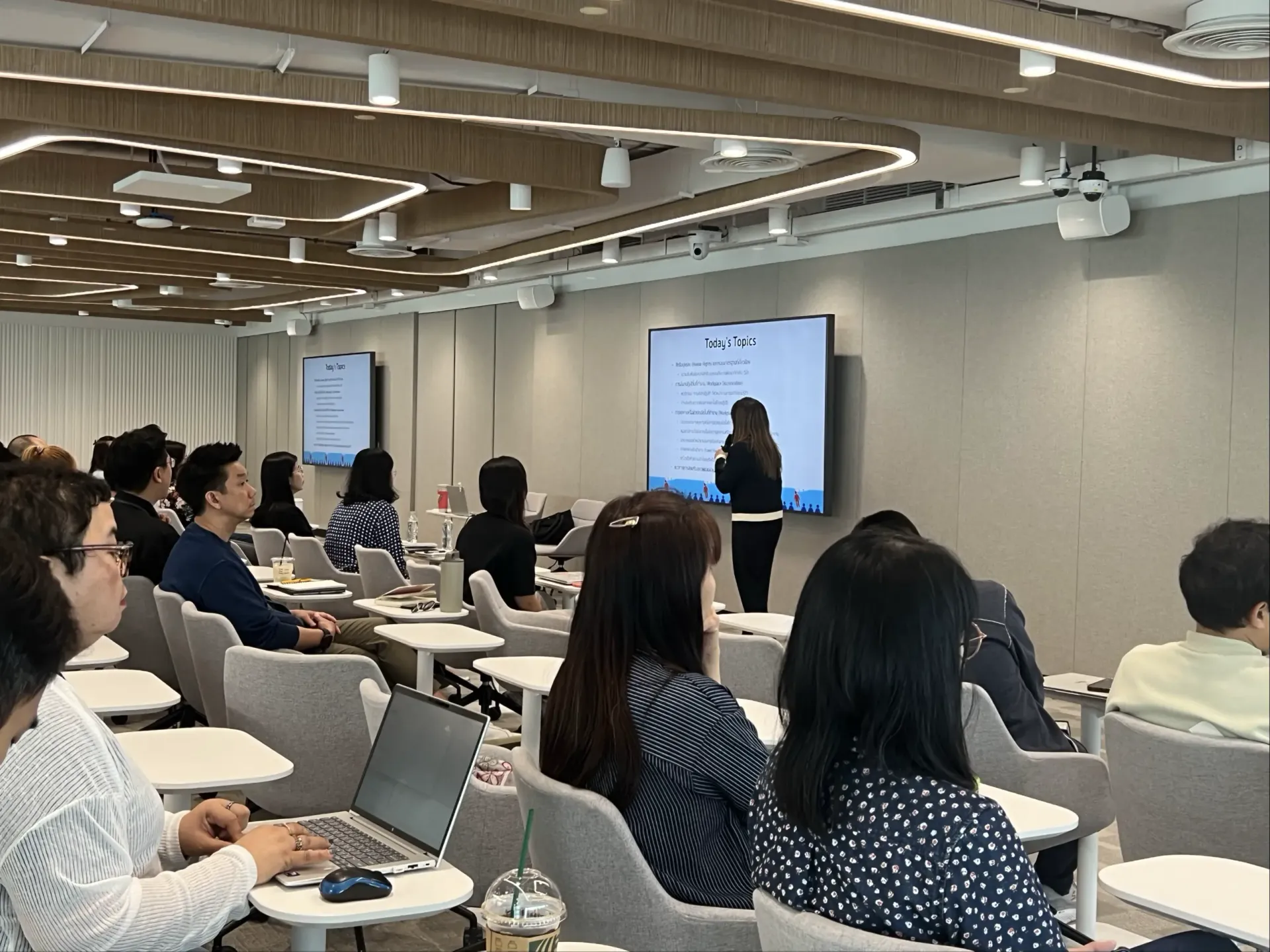
The Company organized a knowledge-sharing activity under the Non-Discrimination & Anti-Harassment curriculum for supervisory-level employees to promote an understanding of human rights, equality, and the respectful treatment of human dignity within the organization, with support from the Human Resources Department. The course covers human rights knowledge based on the Universal Declaration of Human Rights (UDHR), the prevention of all forms of discrimination and harassment, and appropriate guidelines (Do & Don’t) in alignment with the Company’s human rights guidelines. Furthermore, whistleblowing channels and confidentiality measures were communicated to ensure a safe, fair, and inclusive work environment for everyone. This practical training enables employees to apply their knowledge to real work situations, reducing the risk of human rights violations and workplace conflicts. It reflects the Company’s commitment to cultivating a corporate culture that respects diversity, promotes equality, and supports effective collaboration, which serves as a fundamental pillar for sustainable business operation.
A total of 73 persons participated in the program
The Company implemented the “Beyond Rainbow Ð DEI” project to promote Diversity, Equity, and Inclusion both within the organization and in society. This included organizing a forum featuring experts from various sectors to foster understanding of DEI concepts and support the Pink Economy. Furthermore, the Company has applied research findings regarding the challenges faced by diverse social groups to its recruitment processes to ensure neutrality, reduce bias, and increase equal opportunities within the organization. The Company has developed comprehensive benefits for all groups, including LGBTQIAN+ employees, while improving facilities, fostering a culture of open feedback, and supports women in leadership positions. This project reflects the Company’s commitment to respecting human rights and building a sustainable organization through the power of true diversity and inclusion.
A total of 13 persons participated in the program
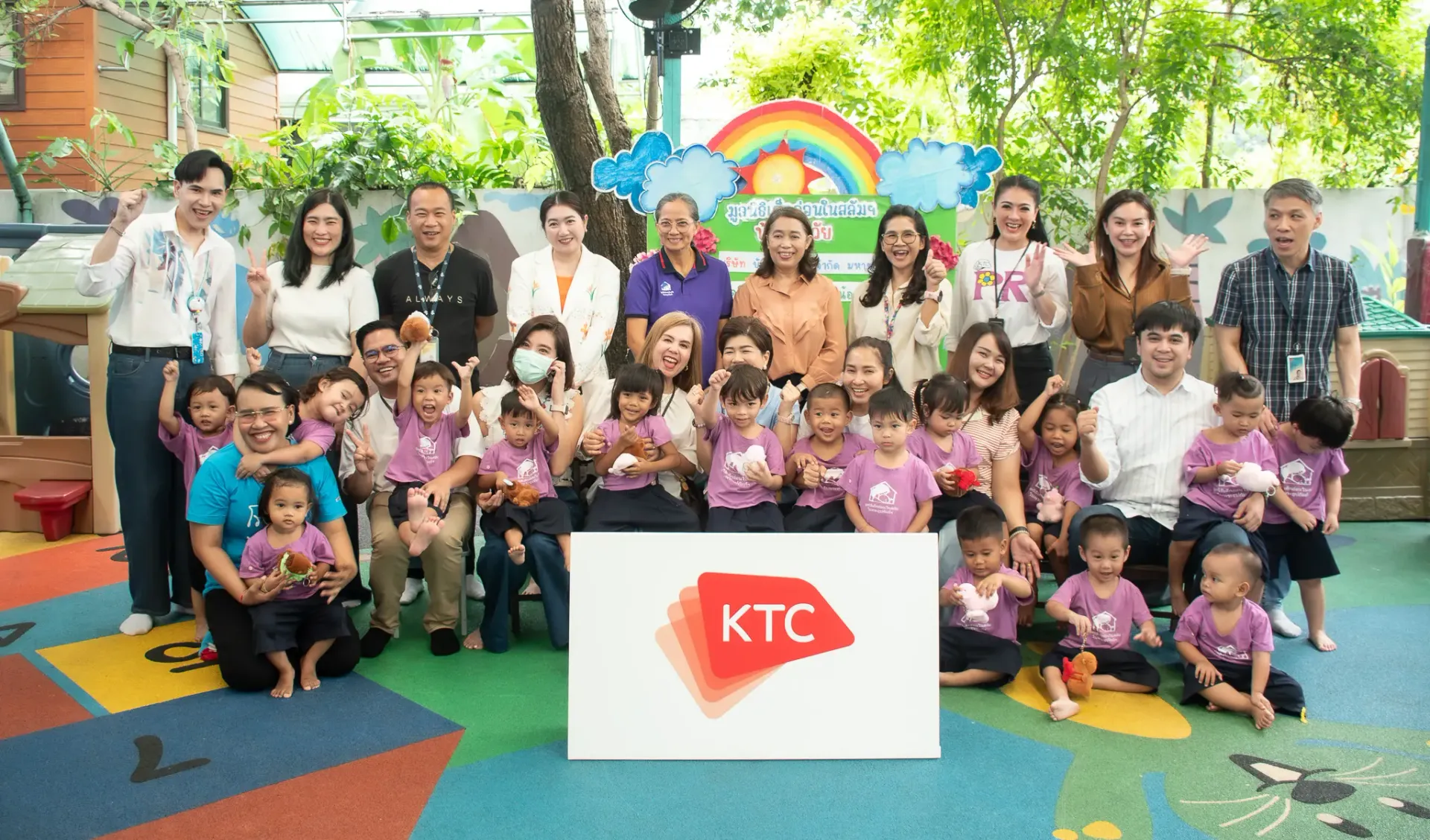
The Company organized a project that provided opportunities for employees and interns to participate in volunteer activities. Participants spent time and engaged in activities with vulnerable children, with the goal of promoting learning and experience sharing between volunteers and the children. The project also aimed to raise awareness among participants regarding the social issues these children face, such as inequality, access to education, and social inclusion.
A total of 120 persons participated in the program
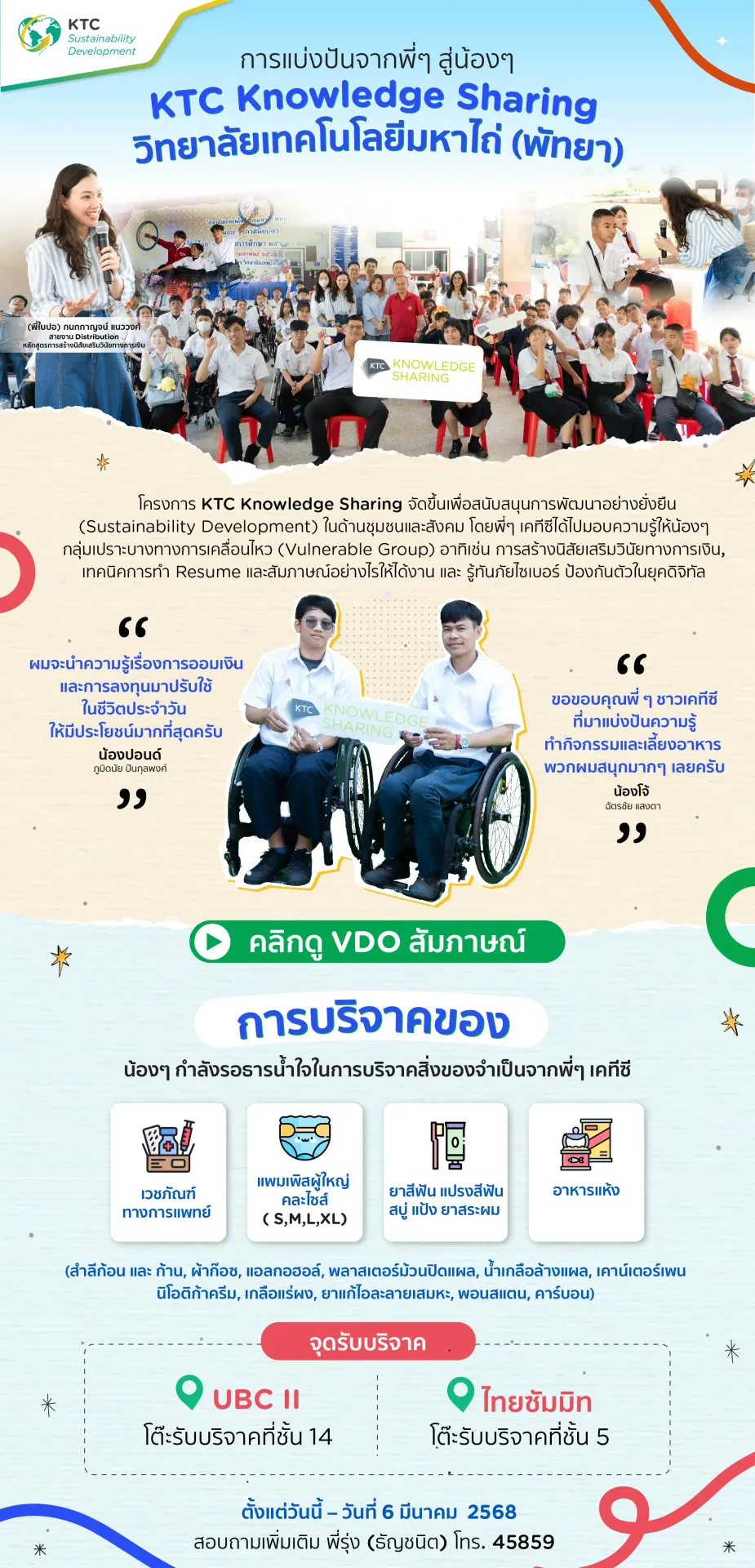
The Company organized a project for volunteer employees to share knowledge with vulnerable groups (persons with disabilities) in various areas such as financial literacy, job application preparation, and essential life skills. By leveraging the specialized expertise of employees to transfer knowledge, the project ensured that participants gained understanding and could effectively apply these skills in their daily lives.
A total of 120 people from vulnerable groups (persons with disabilities) participated in the program
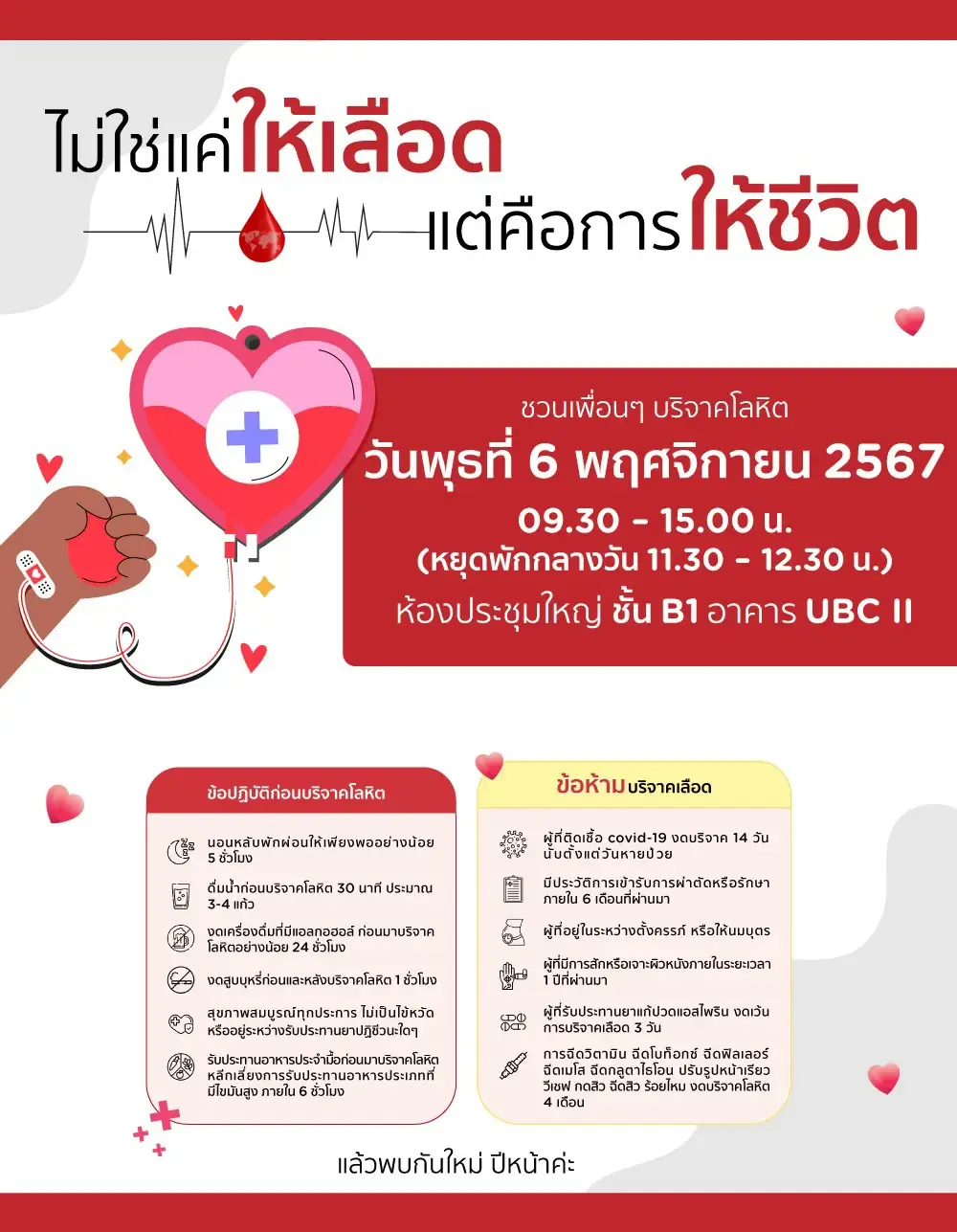
In collaboration with the Thai Red Cross Society, the Company organizes blood donation drives at its headquarters four times a year to support the national blood reserve for patients nationwide. This project is open to both employees and the public. The Company aims to promote public consciousness and continuous social contribution, while providing a convenient channel for those willing to support the Thai Red Cross Society’s mission in saving lives.
A total of 300 donors and collected a total of 264 units or 118,800 cc of blood
In partnership with SABINA, the Company provided an opportunity for employees to participate in sewing artificial breasts to be donated to breast cancer patients at various healthcare facilities. The initiative aims to support patients’ physical recovery and emotional well-being following surgery, while also fostering a sense of social responsibility among employees through meaningful volunteer activities that create tangible social value.
A total of 40 persons participated in the program, producing of 100 artificial breasts
In 2025, the Company made charitable donations totaling 912,089 Baht. The donations were provided to hospitals, educational institutions, foundations, and temples.
The Company implemented an Electronic Equipment Donation Program for the Association of the Physically Disabled International. The program has been carried out for the second consecutive year to promote the concept of a circular economy through the donation of used electronic equipment, including televisions, computer monitors, mobile phones, tablets, keyboards, electrical cables, and aluminum can pull tabs, to the Association of the Physically Disabled International. Donated items are sorted, repaired, and recycled in accordance with appropriate procedures before being sold to generate income for the procurement of essential assistive devices, such as wheelchairs and hand‑propelled tricycles. This initiative aims to support and enhance the quality of life of persons with disabilities across Thailand.