In 2025, the workplace environment assessment results were in compliance with applicable standards and regulatory requirements
The Company recognizes occupational health and safety (“OHS”) as fundamental factors contributing to employees’ quality of life, business continuity, and stakeholder confidence. Accordingly, the Company has established a governance framework and management system for occupational health and safety, covering own operations, employees, persons under its supervision, as well as suppliers and business partners throughout the supply chain, in compliance with applicable laws, regulations, and relevant standards.
The Company emphasizes the prevention and mitigation of operational risks through hazard identification, risk assessment and prioritization, and the integration of assessment results into action plans. Quantitative targets are established to support monitoring, evaluation, and continuous improvement of performance, alongside promoting the participation of employees and employee representatives in communication and the development of occupational health and safety measures. These efforts aim to foster a safe, healthy, and sustainable working culture over the long term.
Positive impacts: Effective management of occupational health and safety helps reduce economic losses arising from workplace accidents, injuries, and work-related illnesses, resulting in lower medical expenses, absenteeism, and compensation costs. It also enhances work efficiency and supports business continuity.
Negative impacts: Investments in the development of safety systems, protective equipment, technology, and employee training may lead to higher operating costs. In addition, the improvement or enhancement of safety measures may affect operational flexibility during certain periods.
Positive impacts: Appropriate management of the working environment helps reduce inefficient use of resources, minimize waste generated from operational processes, and lower the risk of leakage or contamination that may adversely affect the environment.
Negative impacts: The use of certain safety equipment or materials may result in increased waste if not properly managed. In addition, workplace improvements or repairs may lead to higher consumption of resources and energy during the implementation period.
Positive impacts: Creating a safe and healthy working environment enhances the quality of life of employees and their families, reduces the risk of accidents that may affect surrounding communities, and supports the Company’s recognition as a socially responsible organization.
Negative impacts: If the Company does not adequately promote a culture of safety and employee well-being, it may adversely affect employee engagement and motivation and undermine stakeholder confidence.
Positive impacts: The implementation of occupational health and safety practices serves to protect employees’ fundamental rights and reduces the risk of discrimination related to health and safety. In addition, extending safety standards to business partners throughout the supply chain helps enhance the protection of human rights more broadly.
Negative impacts: In cases where oversight or monitoring is insufficient, there may be risks of violations of employees’ health and safety rights, including those of workers within the supply chain. Furthermore, safety measures that are not aligned with the context of certain employee groups may affect equitable access to a safe working environment.
The Company complies with the requirements under the Occupational Safety, Health and Environment Act B.E. 2554 (2011), as well as all applicable OHS laws, regulations, and other relevant legal requirements. The Company also complies with relevant OHS international standards and regulations, voluntary programs and collective agreements on OHS to effectively manage risks and control workplace hazards. The Company operates its offices in a building that is certified to ISO 45001:2018, demonstrating compliance with internationally recognized occupational health and safety management standards. The Company also works closely with the building management to implement and maintain workplace safety measures, ensuring a safe, healthy, and compliant working environment for employees and other building occupants.
The Company has established an Occupational Health and Safety in the Workplace Policy (“OHS Policy”) that applied to all employees including contractors and individuals working under the Company’s supervision to promote the safety and well-being of its employees. Relevant practices are incorporated into the Code of Conduct, which include consultation with workers’representatives, and are reviewed and approved by the Board of Directors on an annual basis. The establishing policies and practices that prioritize the occupational health and safety of executives and employees. The Company promotes and fosters a strong safety culture, ensures that workplaces provide a safe and healthy environment that does not adversely affect well-being, and implements preventive measures to reduce workplace accidents, injuries, and work-related illnesses. In addition, the Company continuously improves the effectiveness of its occupational health and safety and workplace environment management system. Key practices are as follows:
The Company has established a management structure for OHS in the workplace by assigning oversight responsibilities to the Occupational Safety, Health and Environment Committee, the Crisis Management Committee, and Senior Safety officer. These bodies are responsible for overseeing and promoting effective occupational health and safety practices to ensure efficient management of OHS in the workplace.
The Company has a commitment to continually improve the performance of the OHS management system. The Company implements an approach to OHS in the workplace management by integrating risk management, hazard prevention, emergency preparedness and response, and employee health and occupational well-being, together with strengthening safety knowledge and culture across all operational processes. The scope covers activities from building design and construction, work control and supervision, to the provision and maintenance of a safe and appropriate working environment. In addition, the Company has established channels and systematic processes for incident reporting, monitoring, investigating, and root cause analysis. The findings are used to develop preventive measures, prevent recurrence, and continuously and effectively elevate safety standards.
The Company has systematically integrated occupational health and safety requirements and standards into its procurement and contracting processes to ensure that all suppliers and business partners operate in compliance with the Company’s established occupational health and safety standards. Contracts entered between the Company and its suppliers, and business partners include explicit provisions requiring them to acknowledge, accept, and strictly comply with the Supplier Code of Conduct, which clearly defines occupational health and safety principles and requirements.
In addition, the Company conducts due diligence and qualification assessments of suppliers and business partners, including the verification of licenses, certifications, and relevant documentation in accordance with applicable laws and prescribed standards. This process aims to confirm operational readiness and capability to perform work safely, while mitigating risks that may affect employees, assets, and relevant stakeholders.
The Company conducts workplace inspections, risk assessments, and hazard identification related to Occupational Health and Safety covering all work areas. Assessments and risk prioritization are carried out by relevant functions, including the Human Resources business unit, General Services business unit, and occupational health nurses. Appropriate control measures are then implemented in accordance with the Hierarchy of Controls through the integration of action plans with quantified targets to address identified risks. These measures begin with risk elimination, substitution, engineering controls, administrative controls, and the use of personal protective equipment, in order to reduce occupational risks and hazards for both employees and contractors working within the office premises. Employees have the right to refuse or withdraw from work situations that they reasonably believe may pose risk of injury or adverse health effects. The Company ensures protection from retaliation for employees who exercise this rights.
Hazard Identification and Risk Assessment
In addition, the Company collaborates with external parties to inspect office premises, buildings, and critical systems, such as building structures, fire prevention and suppression systems, electrical systems, and elevator systems, to ensure compliance with applicable laws, regulations, and standards. At the same time, the Company conducts ongoing internal inspections of workplace environmental factors, including air quality, lighting, temperature, and humidity.
The Company utilizes the assessment results to prioritize identified risks and integrate them into its Occupational Health and Safety action plans. Appropriate preventive and control measures are established, along with quantified targets to enable performance monitoring and continuous improvement.

In addition, the Company has continuously implemented the Clean & Care Program to enhance workplace safety by maintaining cleanliness, orderliness, usability, and information security. The KTC Clean & Care Committee conducts on-site inspections on a monthly basis to ensure compliance and continuous improvement.
The Company has developed systems and mechanisms for systematically reporting accidents, injuries, work-related illnesses, and unsafe incidents to enable effective identification, investigation, and management of occupational health and safety risks. Information obtained from such reports is incorporated into fact-finding, investigation, and root cause analysis processes, followed by the implementation of appropriate corrective and preventive measures to prevent recurrence and continuously enhance workplace safety standards.
Reports can be submitted through the following channels:
The Human Resources business unit, General Services business unit, and occupational health nurses conduct fact-finding to analyze root causes, define preventive measures to avoid recurrence, and implement immediate corrective actions within two hours.
The findings from all accident and unsafe incident investigations are subject to internal review and reported to the Occupational Safety, Health, and Environment Committee for consideration, oversight, and review of long-term preventive measures. This process ensures that such measures effectively mitigate risks and prevent recurrence. Summaries of incidents and related actions taken are documented and presented in the Committee’s monthly meeting reports.
The Company places importance on protecting employees who report hazards or risk situations by ensuring that all reported information is kept confidential and by assuring that employees will not be subject to disciplinary action, discrimination, or any adverse consequences as a result of making such reports.
In addition, the Company continuously evaluates its progress in reducing and preventing health issues and risks by comparing performance against the targets set in the Company’s occupational health and safety plan.
In 2025, the Company recorded one workplace accident in which an employee sustained a scald injury from hot water. The Company immediately provided first aid and arranged for medical treatment, while covering medical expenses and providing benefits in accordance with applicable labor laws and internal policies. The employees’ condition was closely monitored until full recovery. Subsequently, a root cause analysis was conducted, and preventive measures were enhanced, including equipment adjustments, installation of warning signage, and additional safety training, to prevent recurrence. All actions were undertaken in accordance with established safety principles and with transparency and accountability toward employees.
The Company has integration of actions to prepare for and respond to emergency situations though established systematic emergency preparedness and response plans and measures to manage risks that may impact on employee safety and business operations. These measures cover various scenarios, such as fire incidents, emergency evacuations, and other events that may pose risks to life and property. The Company provides training, conducts drills, and communicates appropriate procedures to enhance employees’ knowledge, understanding, and readiness to respond to emergency situations accurately and in a timely manner.
In 2025, the Company conducted fire evacuation training and drills in collaboration with relevant external parties and communicated guidelines for employee response in the event of an earthquake. The outcomes of the drills were reviewed and used to continuously enhance emergency measures and safety communications, to strengthen organizational preparedness for emergency situations.
The Company conducts fire evacuation training and drills on an annual basis to raise safety awareness and enhance employees’ skills in responding to emergency situations. In addition, the Company has developed an educational video titled “How to Evacuate Safely in Case of Fire” to serve as a learning tool that provides essential knowledge and proper practices to follow in the event of a fire.
The Company has developed an instructional video to communicate appropriate actions to be taken in the event of an earthquake, enabling employees to learn and follow safety procedures correctly.
The Company places great importance on employee health and safety, recognizing that occupational illnesses may affect employees’ quality of life, work performance, and the long-term sustainability of the organization. Given the nature of the Company’s operations as office-based work, the primary occupational risks relate to prolonged computer use, office syndrome, work-related stress, and visual fatigue.
The Company provides basic health benefits to employees to appropriately support workplace safety, health, and quality of life. The focus is on health risk prevention, primary healthcare, and emergency support during working hours through comprehensive and accessible welfare measures. In 2025, the Company continued to implement employee health management initiatives as follows:
The Company operates two nursing rooms at its main offices located at United Business Center II (UBC2) Building and Thai Summit Building, equipped with on-site nurses and basic medical supplies.
The Company provides employees with access to vaccinations at special rates, such as quadrivalent and trivalent influenza vaccines, with 714 employees receiving vaccinations and 81 employees opted for other alternative vaccines during the year.
The Company has established systems to monitor, supervise, and follow up on employees who are ill or injured, while providing guidance and coordinating appropriate medical treatment.
Medical benefits are provided to all employees and can be extended to employees’ family members on a voluntary basis, with the Company subsidizing a portion of health insurance premiums.
The Company regularly organizes Occupational Health and Safety activities and training programs to enhance awareness and reduce risks from workplace accidents. This is complemented by the continuous communication of relevant information and practical guidelines through email and internal communication channels (KTC UNITE).
In 2025, the Company continuously organized activities and training programs for employees, covering physical and mental health promotion, stress and emotional management, as well as the enhancement of safety skills and basic first aid. Details of the activities are as follows:
The session promoted proper nutrition knowledge to help employees understand the principles of making healthy food choices. This was complemented by guidance on maintaining regular exercise to strengthen physical health and overall well‑being. The activities included advice from health experts along with practical daily self‑care techniques. Employees also had opportunities to participate in hands‑on sessions and share personal experiences to inspire positive health behavior changes. The initiative aimed to enhance overall well‑being and support employees in maintaining sustainable readiness for work throughout the year.
A total of 281 persons participated in the program

The session provided knowledge on cancer prevention along with important health precautions. The activity included guidance on proper health‑care practices for both employees and their family members to raise awareness of disease prevention. Participants also received preliminary health assessments through Body Composition measurements and observed demonstrations of healthy cooking to promote appropriate dietary habits. The program aimed to enhance understanding of well‑being and support employees in maintaining strong and sustainable health.
A total of 34 persons participated in the program
The program promoted skills for cultivating personal happiness to help employees develop sustainable emotional well‑being. The activity focused on learning techniques for managing thoughts and emotions to build mental resilience and increase positive energy in daily life. Participants received practical guidance to help them cope with stress, maintain work–life balance, and strengthen their ability to stay focused on what matters, supporting overall work effectiveness. The program aimed to enhance employees’ mental well‑being and promote a better quality of life.
A total of 144 persons participated in the program
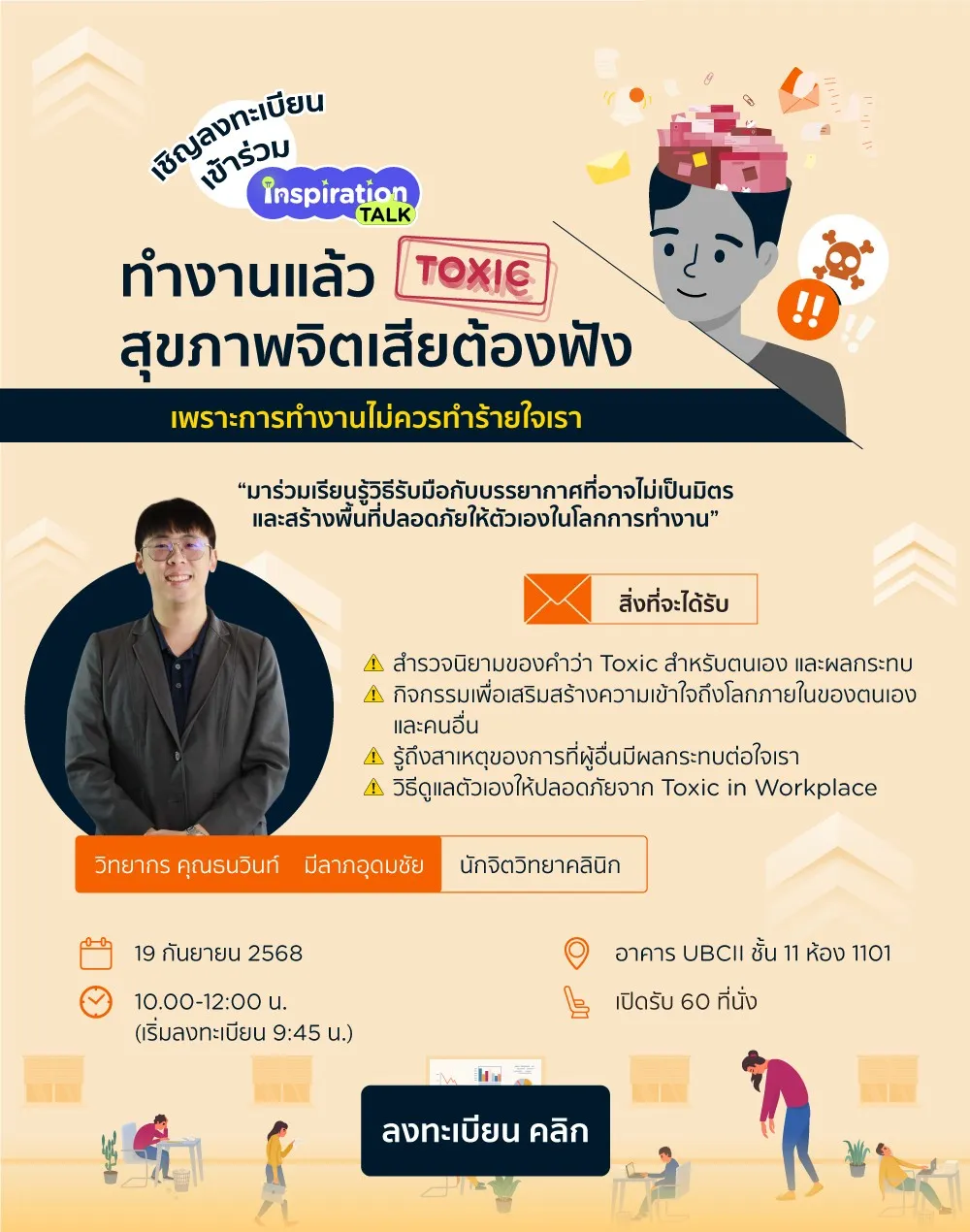
The session explored the meaning of “toxic” from participants’ own perspectives and examined its impact on mental health through activities that encouraged awareness of one’s inner world and the perspectives of others. Participants also learned about underlying causes of behaviors or situations that affect mental well-being, along with practical self-care approaches.
A total of 244 persons participated in the program
The course promoted awareness and proper response to accidents through training on correct CPR techniques, confident use of AED devices, and essential skills such as bleeding control, wound dressing, and safe assistance for unconscious people. The program also covered first aid kit preparation, emergency management in various situations, and emergency reporting channels, to enhance preparedness for unexpected incidents in daily life and in the workplace.
A total of 86 persons participated in the program
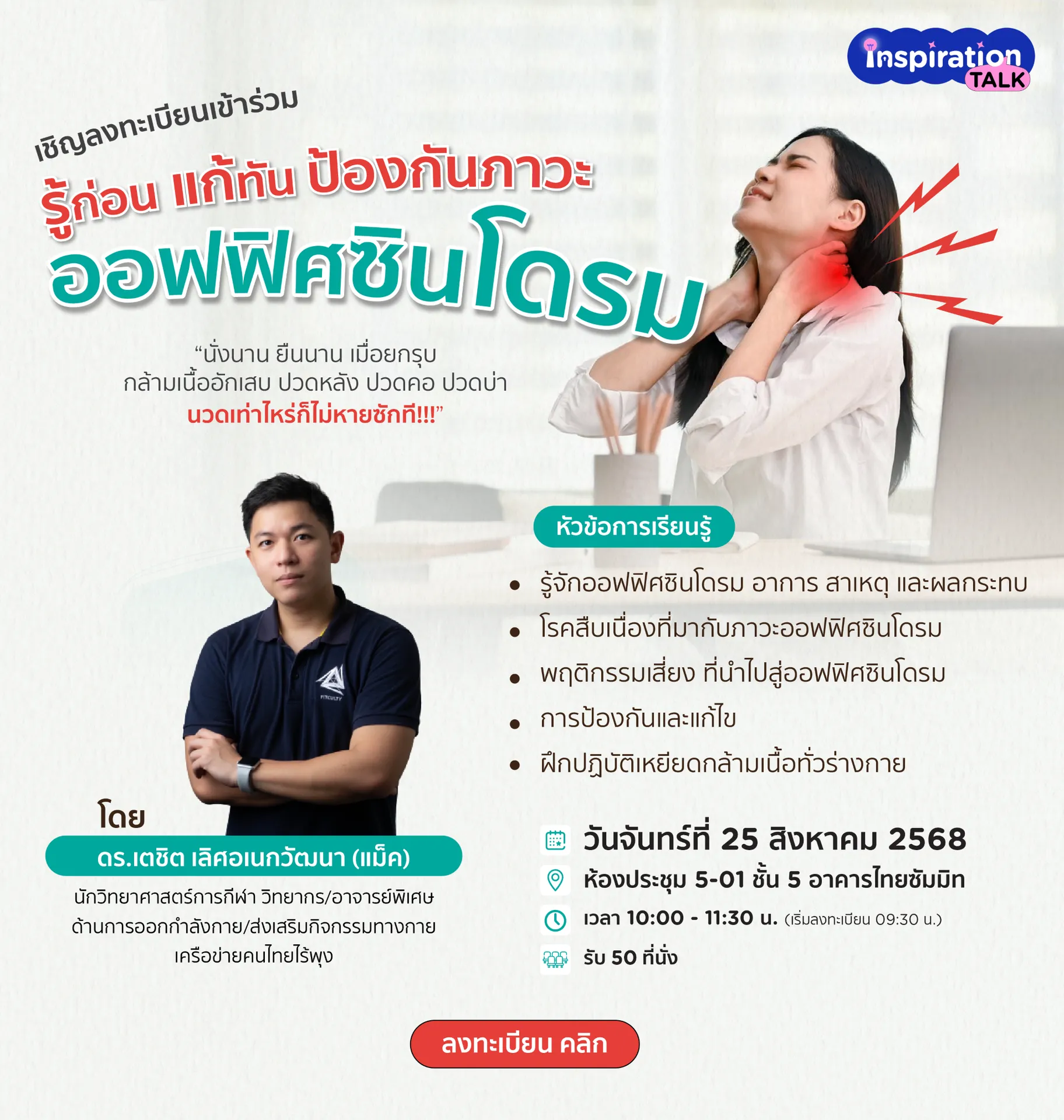
The program helped participants gain a comprehensive understanding of office syndrome, including its symptoms, causes, impacts, and related conditions. Participants also learned about risk behaviors to avoid and appropriate preventive practices, followed by full-body stretching exercises to restore physical balance and alleviate discomfort caused by prolonged sitting at work.
A total of 32 persons participated in the program
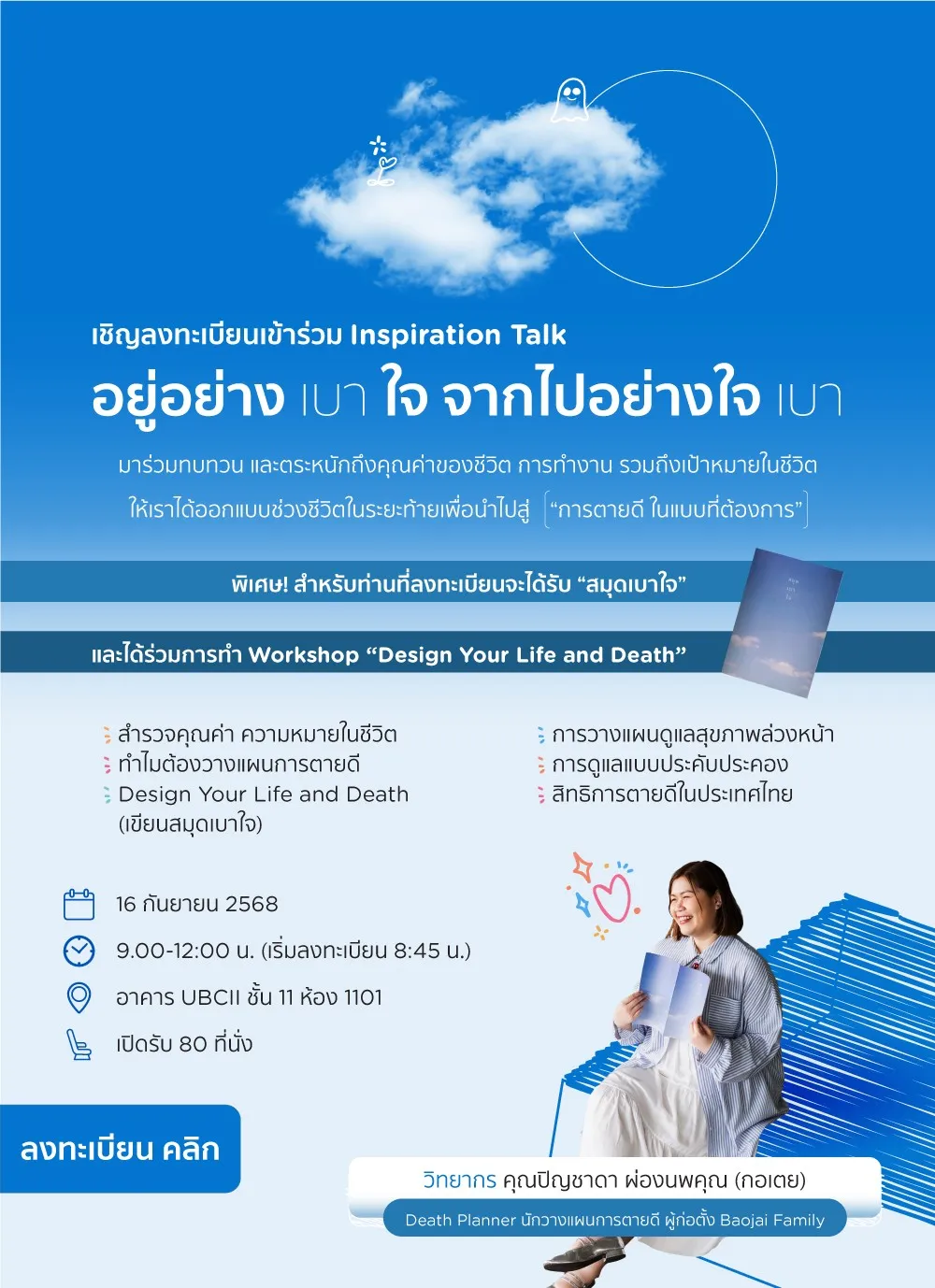
The session provided a reflective space for participants to revisit personal values, the meaning of life, and work-related goals, enabling them to mindfully design their “end-of-life journey” in accordance with their own preferences. The program covered the rationale for good death planning, advance health care planning, palliative care, personal life and death planning, as well as an understanding of the right to a good death in Thailand.
A total of 187 persons participated in the program
The workshop enhanced understanding of positive psychology through the PERMA model, which helped participants explore their personal values and rediscover positive moments that may have been overlooked, while connecting those experiences to meaningful relationships. The workshop also provided space for participants to “sincerely appreciate” themselves and those around them. The session concluded with practical guidance on maintaining mental well-being and managing emotional fatigue in the future.
A total of 25 persons participated in the program